Conversations about money have long been considered taboo at the holiday dinner table. Yet when multiple generations gather under one roof, the table becomes one of the most natural, meaningful settings to step back from day-to-day logistics and talk about what truly matters.
While estate plans and balance sheets protect a family’s assets, open conversation is what keeps everyone aligned around them. When families gather for the holidays, those shared stories and values matter just as much as the numbers on the page. To help get those discussions started around your table this season, our team at Bridgewater Advisors put together 10 questions—along with a quick look at why each one counts.
Why it matters: Every family carries inherited life lessons, invisible habits, and unspoken ethics that quietly shape day-to-day financial decisions. Asking elders and parents to share the rules of thumb they still live by often triggers rich anecdotes and recollections, preserving practical wisdom across generations.
Why it matters: Acknowledging the sacrifices that built a family’s foundation fosters genuine gratitude. At the same time, giving younger generations permission to retire outdated financial mindsets empowers them to build a healthier, more intentional relationship with wealth.

Why it matters: Wealth is deeply tied to identity. Inviting family members to name the core traditions and values behind how the family built its wealth helps ensure that what lives on is not just capital, but the character and shared history behind it.
Why it matters: Every generation holds a distinct perspective on success, responsibility, and security. Giving younger family members the floor to define wealth in their own words offers parents and grandparents invaluable insight—and can even serve as a springboard for practical next steps, like gifting into a shared brokerage or family investment account in the new year.
Why it matters: As we move through different seasons of life, money shifts from a goal to a tool. Sharing how those priorities have evolved helps family members understand one another’s core values and align around what truly constitutes a well-lived life.

Why it matters: Younger generations face unprecedented comparison pressure. Asking them to define “enough”—as well as which traditional milestones (like homeownership, marriage, or retiring at 65) still matter to them and which ones they are rewriting—validates their reality and sparks an honest conversation about mindful spending versus status-driven pressure.
Why it matters: Every successful team rallies around an ultimate shared goal. Defining what “winning” looks like as a family ensures everyone is pulling toward the same long-term purpose rather than competing for individual accomplishments.
Why it matters: Taking existing constraints off the table reveals pure priorities. Whether answers center on philanthropy, travel, starting a venture, or securing peace of mind, this lighthearted prompt uncovers what each person values most when resources are limitless.

Why it matters: Professionals who step away from demanding careers without a vision for their time often find themselves listless, and can end up spending their retirement obsessing over their accounts. Discussing post-career passions early reframes retirement around purpose and fulfillment, not just portfolio balances.
Why it matters: Even within financially successful families, individuals don’t always understand how their assets work together—which holdings act as diversifiers, which serve as return-enhancers, or whether their returns and planning strategies are working as intended. Opening the door to this question encourages financial literacy and ensures no one feels left in the dark about their own financial picture.
If I give you 1 penny on May 1st and double what I give you each successive day of the month, how much will you have in total on May 31st? (Whoever comes closest gets an extra piece of pie!)
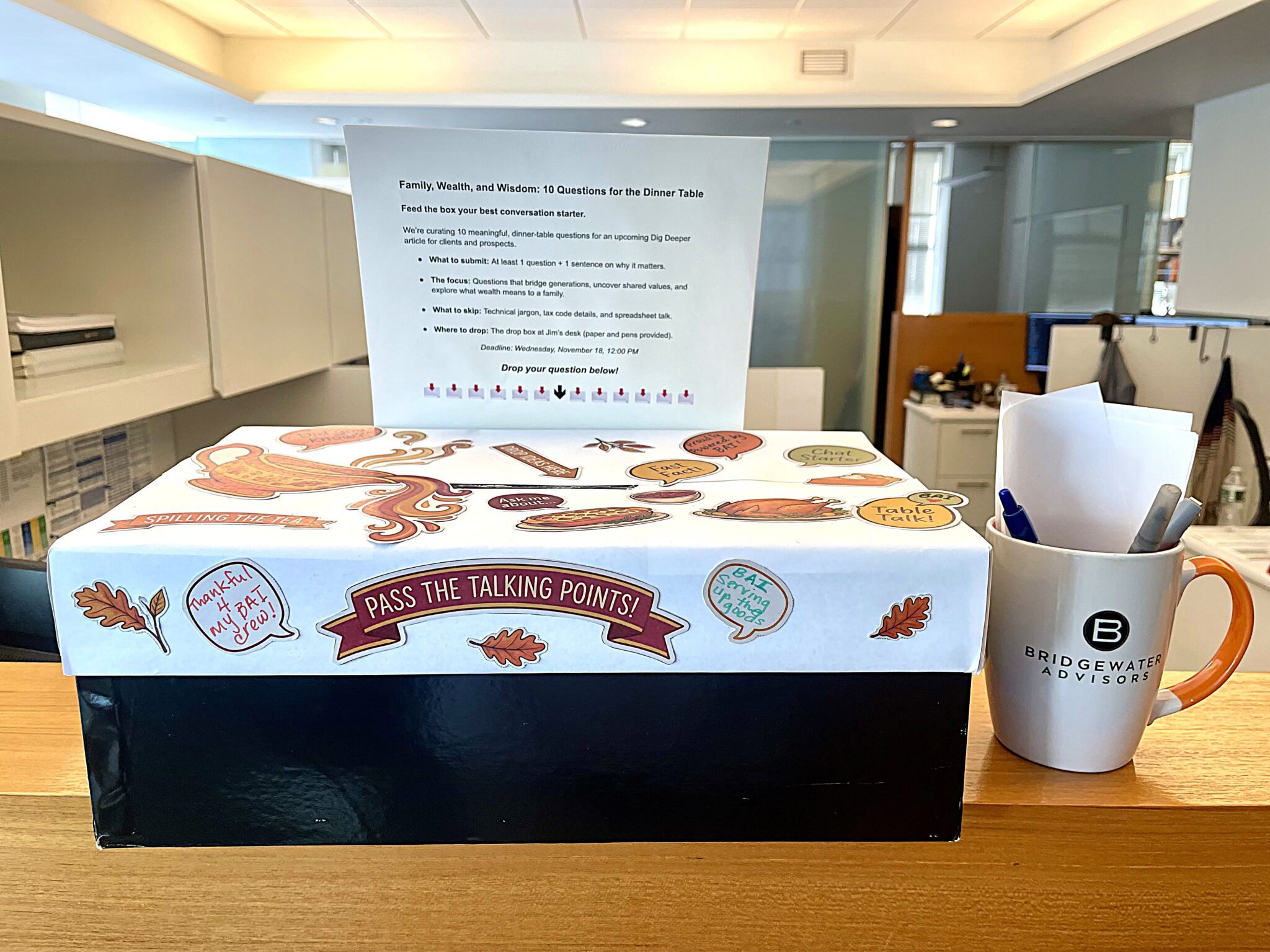
Every question on this list came directly from our own team. Ahead of the holidays, we set up a festive drop box in our office—complete with pens and paper—and invited everyone at Bridgewater Advisors to submit their favorite handwritten dinner-table prompts and explain why they matter. Our families, after all, have the same financial questions yours may have, too.
At Bridgewater Advisors, we believe the strongest financial plans are built on open communication and shared values. Our hope is that these questions serve as a helpful starting point for meaningful dialogue around your table this holiday season and beyond.
Why it matters: Beyond earning bragging rights (and an extra slice of pie), this classic brainteaser is a memorable, lighthearted way to illustrate the power of compounding—especially for younger family members just beginning their wealth-building journeys.
Important Disclosure: Bridgewater Advisors Inc. is an SEC-registered investment adviser. Registration with the SEC does not imply a certain level of skill or training. This article is provided for informational and educational purposes only and does not constitute personalized investment, financial, legal, or tax advice, nor is it a solicitation or recommendation to buy or sell any security or adopt any investment strategy. Readers should consult with their own financial, legal, and tax professionals regarding their individual circumstances before making any financial decisions.